-
China's Huawei achieves annual sales of $124 billion in 2024주식,부동산 투자 2025. 5. 30. 16:02
Huawei is China's leading global ICT (Information and Communication Technology) company and is leading the global market in the high-tech fields such as 5G, AI, and semiconductors. This article examines Huawei's major technologies, company size, communication equipment delivery status, history and relationship with the CCP, and future semiconductor strategies.

1. Huawei's Key Technologies and Innovations
1) Global Leader of 5G&6G Communication Technology
Huawei ranks first in the global market share in 5G communication equipment and is also actively investing in the development of next-generation technologies such as 5.5G and 6G. In particular, its technological prowess in the 5G field stands out in the areas of fast data transfer, low latency, and large-scale connectivity.
2) AI semiconductors and Ascend platforms Huawei is competing with global AI chip, Nvidia
Ascend AI chip platform, the series such as Ascend 910B, 910C, and 910D are rapidly increasing their market share in the AI market in China, and 910D is being developed with the goal of surpassing Nvidia H100.
3) R&D and Patent Competitiveness
Huawei had more than 110,000 active patents across more than 45,000 patent groups, ranking No. 1 in global patent applications. 54.8% of the total workforce is R&D talent, and more than 20% of its annual sales are invested in R&D.
4) Smartphones such as smartphones, clouds, and IoT mobile phones
Mobile phones P-series, and Mate series are equipped with innovative technologies such as camera (like a collaboration), their own chipset (Kirin), and fast charging, and are also expanding their markets based on their own chips and platforms in the cloud, AI, and IoT fields.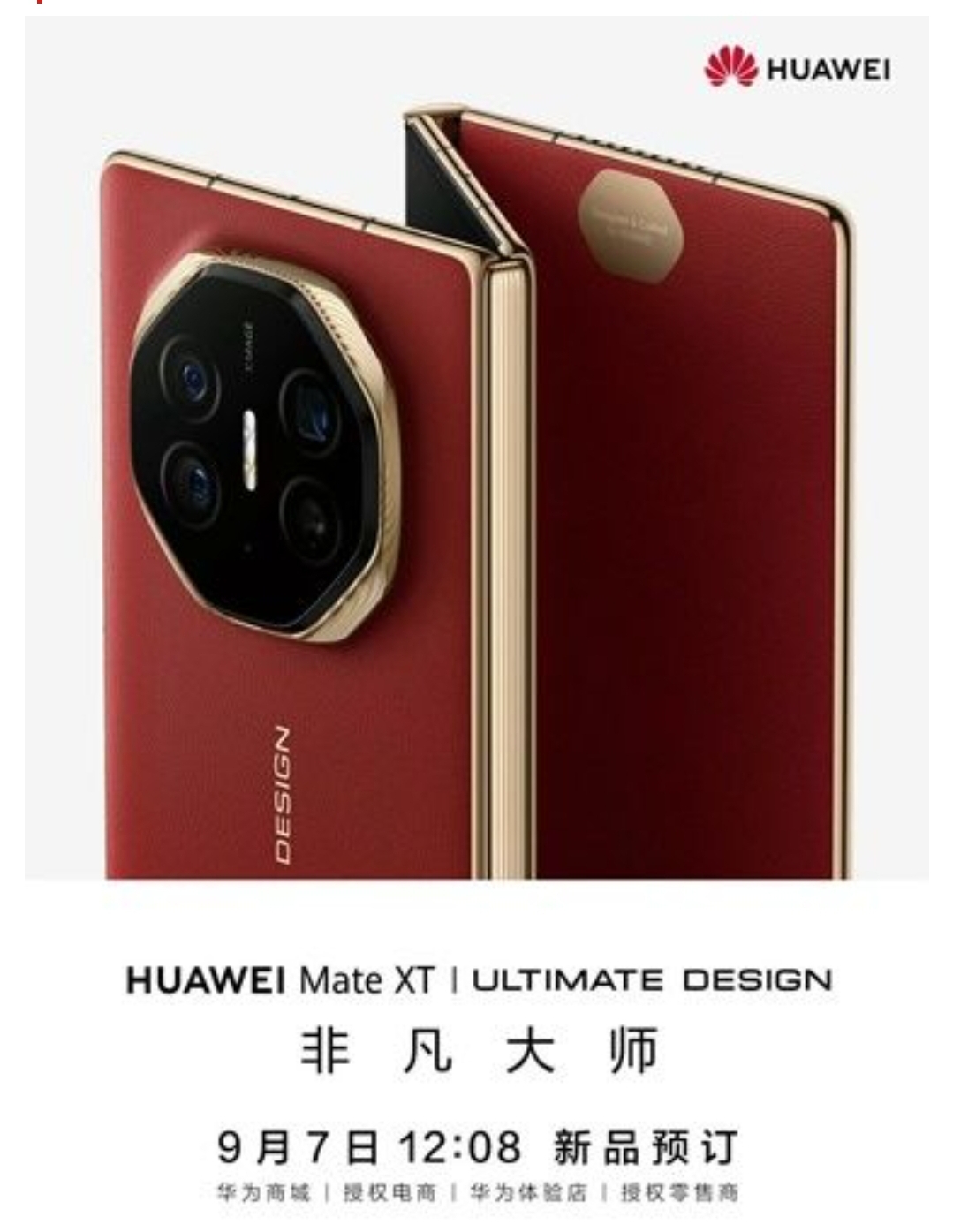
2. Huawei's Company Size and Global Market Status
1) Sales and Manpower Revenues 860 billion yuan (about 171 trillion won) in 2024, the second-largest year-on-year growth. The total number of employees is about 200,000, of which about 110,000 are R&D personnel.
2) Communication Equipment Market Share As of 2021, it ranks first with 28.7% of the global communication equipment market share (15% by Ericsson, 14.9% by Nokia), and maintains the leadership with 18% share in markets other than China.
3) Key Delivery Status It supplies communication equipment to more than 170 countries around the world, and about 30 percent of LG U+'s 5G base station equipment in Korea is from Huawei. Huawei's patented technology has been applied to more than 300 million Wi-Fi devices every year, and the company has succeeded in diversifying its business to automobiles and smart car solutions.
3. Huawei's History and Growth Process
1)Foundation and Growth Ren Zhengfei, a former member of the People's Liberation Army, was founded in Shenzhen in 1987, started by selling telephone switchboards, strengthened its own R&D in the 1990s, expanded its market in China, advanced overseas in the 2000s, and dominated the 3G& 4G communication equipment market. In the 2010s, it entered the smartphone market and grew to the top of the global market.
2) Developing its own OS Due to strong sanctions such as the US sanctions and the 2019 US blacklist, the company is focusing on developing its own OS (Harmony OS) and building its own ecosystems such as semiconductor and AI.
4. The relationship between Huawei and the Communist Party of China
1) Substantial state support and control Huawei is officially a private company owned by its employees, but it actually has close ties to the CCP and state agencies. It has secured entry into overseas markets and price competitiveness by receiving low-interest loans worth tens of trillions of won from a state-run bank in China. Management rights are effectively taken over by management and Communist Party leaders, and employee shares are automatically extinguished upon retirement.
2) Central to strategic national projects Huawei plays a key role in the Chinese government's "technology rollout" policy and semiconductor independence strategy, and is leading the development of advanced semiconductor, AI, and communication infrastructure with direct subsidies and policy support from the government.
5. Huawei's Semiconductor Technology Strategy and Future Outlook
1)Self-reliance of semiconductors and massive investment After the U.S. controlled exports of advanced semiconductors, Huawei is building large-scale semiconductor factories (design, manufacturing, packaging) in Shenzhen and other places with the support of the Chinese government and is pushing for the complete localization of advanced semiconductors such as 7-nanometer chips, high-bandwidth memory (HBM), and Ascend chips for AI.
2) AI chipsets and global competition Ascend AI chips are high-performance chips made in China that will replace Nvidia H100, and are supplying large quantities to telecommunication companies and IT companies (byte dance, etc.) in China, and is developing a "vertical sequencing" strategy that conducts semiconductor design, equipment, and entire production in China.
3)Mid-term to long-term goals and prospects We aim to achieve 70% of the self-reliance rate of semiconductors and core industries by 2028 and focus on securing technological leadership in future industries such as 6G communication equipment, smart cars, and AI, and expect a head-on confrontation with the U.S. and Europe in the global technology hegemony competition.
5. Key features of Huawei's flagship product
The innovation case product line include smartphones (P/Mate series) to Leica cameras, its own Kirin mobile phone chips, fast charging technology, and increasing sales in Asia and Europe at low prices. After the U.S. sanctions, it switched to Harmony, its own mobile phone OS, by breaking away from Google OS. In the field of 5G communication equipment, it is the No. 1 global market share due to fast data processing, low latency, large-scale connection performance, and low price, and it is supplied to 170 countries.
Ascend AI chips are evaluated as Nvidia H100-class performance, optimized for AI computation, accounting for 25% of the Chinese AI market. In the cloud, AI service big data, and IoT fields, it has built its own AI chips and is expanding rapidly to the global market.'주식,부동산 투자' 카테고리의 다른 글
The success story of HYUNDAI, KIA Motors' founding& merger.(1998yr) (4) 2025.06.01 현대자동차와 기아자동차의 창업과 성장, 글로벌 성공 스토리 (12) 2025.06.01 중국 화웨이(Huawei) , 미국 제재에도 2024년 연매출 171조원 달성 (3) 2025.05.30 2025년5월 서울지사 개소한 美國 오픈AI, 현지 인재 채용중 (4) 2025.05.30 메가커피 하형운 대표의 창업 스토리와 성공 비결(최근 반포 원베일리 펜트하우스 계약자로 밝혀져) (10) 2025.05.29